
How to Optimize SEO Content Automatically via API Workflows and Image CDNs
Table of Contents
- Building the Programmatic On-Page SEO Engine
- Media Rendering and Image Generation CDNs
- Scaling Internationally Without Duplicate Content Penalties
- Automating Internal Linking and Feedback Loops
- Conclusion
Publishing dozens of technical articles a month manually is a fast path to engineering burnout and messy metadata. If you manage a growing product blog or programmatic publishing system, you already know that producing raw draft text is only half the battle. To rank consistently, you need to optimize seo content at every layer of your technical publishing stack. That means setting up automated pipelines that handle heading hierarchies, visual media, and internal links without manual intervention. In our work building automated publishing engines, we have found that replacing manual editing with API-driven workflows turns content operations into a reliable background process.
Building the Programmatic On-Page SEO Engine
When we build a programmatic SEO blog pipeline, structuring output text correctly from the start is non-negotiable. Raw language model outputs often fail at technical basics. They skip meta descriptions, scramble heading levels, or place key entities in awkward contexts.
Proper on-page SEO automation solves this by running every payload through a validation schema before it reaches your site. The workflow enforces a clean H1-to-H3 hierarchy, injects target entities naturally into introductory sentences, and formats meta titles within strict character limits. This systematic structure strips away human error and keeps your overall content ops lean and predictable.
Media Rendering and Image Generation CDNs
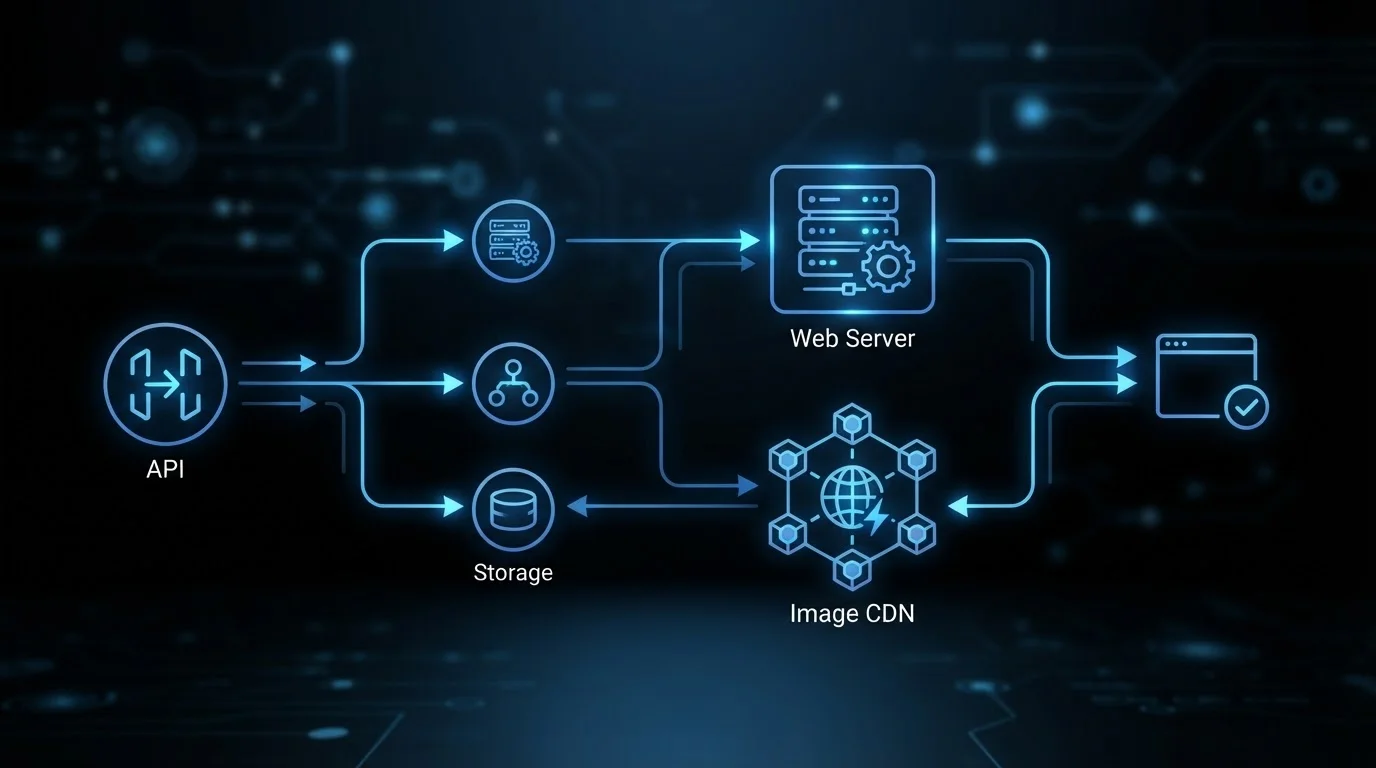
High-performing articles require visual content, but creating graphics by hand slows down automated production. Integrating an image generation CDN directly into your API pipeline fixes this bottleneck.
When an API call creates a new post, the pipeline generates a context-aware header image, compresses it to WebP, and routes it through an edge distribution network. Serving media through a dedicated CDN guarantees high availability and keeps Core Web Vitals scores clean. Meanwhile, the pipeline writes descriptive alt text using the primary entity of the post, handling a step in content optimization in seo that many teams forget to automate.
Scaling Internationally Without Duplicate Content Penalties
Expanding your reach into multiple languages introduces complex technical challenges, especially regarding search engine penalties. When translating content programmatically across different regions, search engines can flag localized pages as duplicate spam if proper tagging is missing.
We address this by enforcing strict canonicalization protocols directly inside the distribution workflow. Each translated article automatically receives self-referencing hreflang tags and localized canonical URLs pointing back to the primary source. Duplicate prevention protocols check existing URL archives before publishing, ensuring your site never serves overlapping or repetitive content across different subpaths.
Automating Internal Linking and Feedback Loops
An archive of isolated articles loses valuable ranking strength over time. Internal linking automation bridges this gap by scanning newly published posts against your database of existing URLs. The system identifies semantic matches and automatically inserts contextual anchor text pointing to your relevant cornerstone pages.
Static content also decays as search intent changes. By establishing continuous API feedback loops, your pipeline can trigger scheduled updates for older posts, refreshing outdated data points or tweaking metadata based on actual performance.
Here is how a manual workflow compares to an API-driven content engine:
| Optimization Layer | Manual Publishing | API-Driven Workflow |
|---|---|---|
| Metadata & Structure | Written manually per post, prone to character errors. | Enforced by strict API schema and automated validation rules. |
| Asset Delivery | Images resized and uploaded manually to media library. | Generated on demand and served via global fast CDNs. |
| Internal Links | Requires manual searches across past archives. | Dynamic semantic matching and automated anchor link insertion. |
| Localization | Requires human translators and manual canonical setups. | Automated translation with built-in duplicate prevention protocols. |
| Content Refresh | Ad-hoc updates, often neglected due to time constraints. | Continuous feedback loops that update older articles on schedule. |
Conclusion
Shifting your blog infrastructure to an automated API workflow frees technical teams from manual editorial overhead while maintaining high search standards. Combining structured metadata validation, fast CDN asset delivery, and dynamic internal linking lets you run content generation like any other reliable software service.
Visit AIrun to set up your project and start generating scheduled, multilingual blog posts with the dashboard.