
The Modern SEO Content Strategist: Scaling Multilingual SaaS Engines Without Extra Headcount
Table of Contents
- Moving from Article Management to Content Ops Architecture
- Automating Multilingual Translation and Duplicate Prevention
- Automating Visual Assets via Dynamic CDNs
- Benchmarking Operational KPIs for Engine Performance
- Conclusion
As a modern seo content strategist, my primary focus has shifted away from manually managing article drafts. Scaling blog output across multiple global regions used to require hiring localized editorial teams, managing messy translation spreadsheets, and waiting weeks for custom design assets. In software growth, those operational bottlenecks kill momentum. Today, we build automated production pipelines that turn a single technical core article into a multi-region growth engine without adding headcount.
Moving from Article Management to Content Ops Architecture
Instead of managing writers, our role in SaaS marketing centers on designing system architectures. We build event-driven pipelines that link content creation, optimization, and instant multi-channel publishing. Shifting your approach to technical content ops allows lean growth teams to execute high-volume strategies with complete control.
When a foundational core article publishes in English, the system triggers downstream actions instantly. We don't wait for manual copyediting or manual site formatting. You can see how this structural shift works in detail by reviewing how to write SEO content at scale using webhooks and AI content engines, which details programmatic keyword targeting and webhook triggers.
Automating Multilingual Translation and Duplicate Prevention
Expanding an international SEO strategy used to mean working with expensive translation agencies. Modern automated setups handle language variants the moment an article hits your database. However, raw translation brings serious indexation risks if you ignore canonical rules and region structures.
To execute effective multilingual SEO, your engine must automatically route translated posts to dedicated regional subdirectories, map clean hreflang tags, and run duplicate content checks. Automated translation workflows process complex technical terminology while protecting your domain from thin-content penalties.
To review automated publishing designs, read about how SaaS teams use event-driven architectures to automate publishing and prevent duplicate content.
Automating Visual Assets via Dynamic CDNs
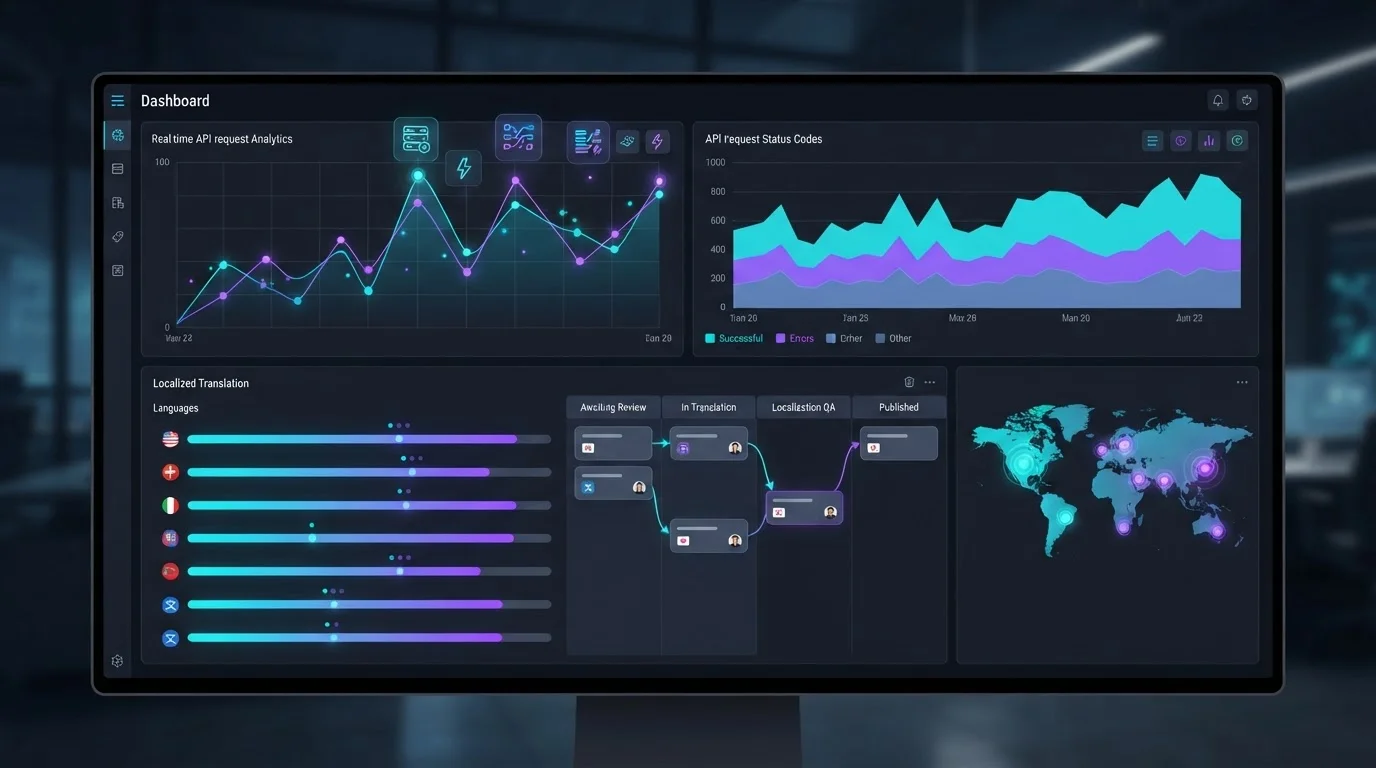
Localization fails when body text is translated but graphics remain stuck in English. A localized post featuring mismatched visual assets breaks user trust and hurts engagement metrics. In an automated publishing workflow, image generation APIs take key context from the post and generate custom graphics on demand.
These generated visual assets ship straight to a dynamic CDN, serving localized images directly to matching target regions. Content automation handles dynamic image compression, alt-text formatting, and asset delivery automatically. As an seo content strategist, this means every global post version deploys fully optimized with distinct visual assets from day one.

Benchmarking Operational KPIs for Engine Performance
Managing an automated pipeline requires shifting your core performance metrics. Instead of counting raw word count output, we track pipeline throughput speed, indexation velocity, and regional organic coverage.
Here is how a traditional manual workflow compares against an automated content engine:
| Performance Metric | Traditional Manual Strategy | Automated Engine Architecture |
|---|---|---|
| Publishing Velocity | 5 to 10 articles per month | 50+ localized articles per month |
| Localization Overhead | $150–$300 per target market | API execution cost (~$1–$3 per post) |
| Visual Asset Creation | Manual design tickets (2–3 days) | Dynamic CDN rendering (< 10 seconds) |
| Duplicate Content Risk | High (manual copy-paste errors) | Low (automated duplicate prevention) |
| Indexation Speed | Days to weeks per region | Instant via API indexing pings |
Tracking these key numbers helps an seo content strategist demonstrate tangible revenue ROI to leadership while maintaining high technical quality across all web properties.
Conclusion
Building an automated content engine transforms how SaaS teams target organic search demand. By moving away from manual content management and adopting event-driven workflows, a single seo content strategist can manage multilingual publishing across dozens of global markets with precision.
Visit AIrun.blog to set up your project and start generating scheduled, multilingual blog posts with the dashboard.