
How to Write SEO Content at Scale Using Webhooks and AI Content Engines
Table of Contents
- Triggering Content Generation via REST APIs and Webhooks
- Structuring Prompts for Search Intent and SEO Accuracy
- Managing Async Processing, Rate Limits, and CDN Assets
- Validating Output Schema and Automating Meta Tag Population
- Comparing Programmatic Content Workflows
- Conclusion
When our engineering team decided to accelerate our search traffic, we quickly realized that manual article creation was bottlenecking our growth. To cover hundreds of programmatic keywords, technical teams need automated systems to write SEO content directly through code.
By connecting webhooks, headless CMS platforms, and AI inference APIs, developers can establish end-to-end publishing pipelines that generate optimized posts on demand. Here is how we build and refine these automated systems.
Triggering Content Generation via REST APIs and Webhooks
Setting up automated publishing begins with an event-driven trigger. Instead of logging into a portal to initiate drafts, your application sends an HTTP POST request containing key details like target keywords, user intent, and category tags.
{
  "topic": "API Gateway Authentication Best Practices",
  "primary_keyword": "api gateway authentication",
  "secondary_keywords": ["oauth2 gateway", "jwt validation"],
  "target_audience": "backend developers",
  "locale": "en"
}
When managing webhook content publishing, your endpoint receives this payload, verifies authentication headers, and sends a 202 Accepted status before queueing the job. This separation keeps your primary application fast while background workers handle the heavy lifting.
Structuring Prompts for Search Intent and SEO Accuracy
An API call is only as effective as the prompt structure behind it. Generic prompts produce fluff that fails to rank. When designing templates for programmatic content creation, we break article generation into distinct stages:
- SERP Intent Analysis: Extract primary entity definitions and target subheadings based on top-ranking competitors.
- Outline Construction: Generate Markdown headings (H2, H3) that logically answer user search queries.
- Draft Generation: Instruct the model to write precise, technical paragraphs, enforcing constraints like zero conversational filler and clear code examples.
We also enforce strict rules against duplicate topic coverage by checking proposed titles against existing slug databases before firing the final generation prompt.
Managing Async Processing, Rate Limits, and CDN Assets
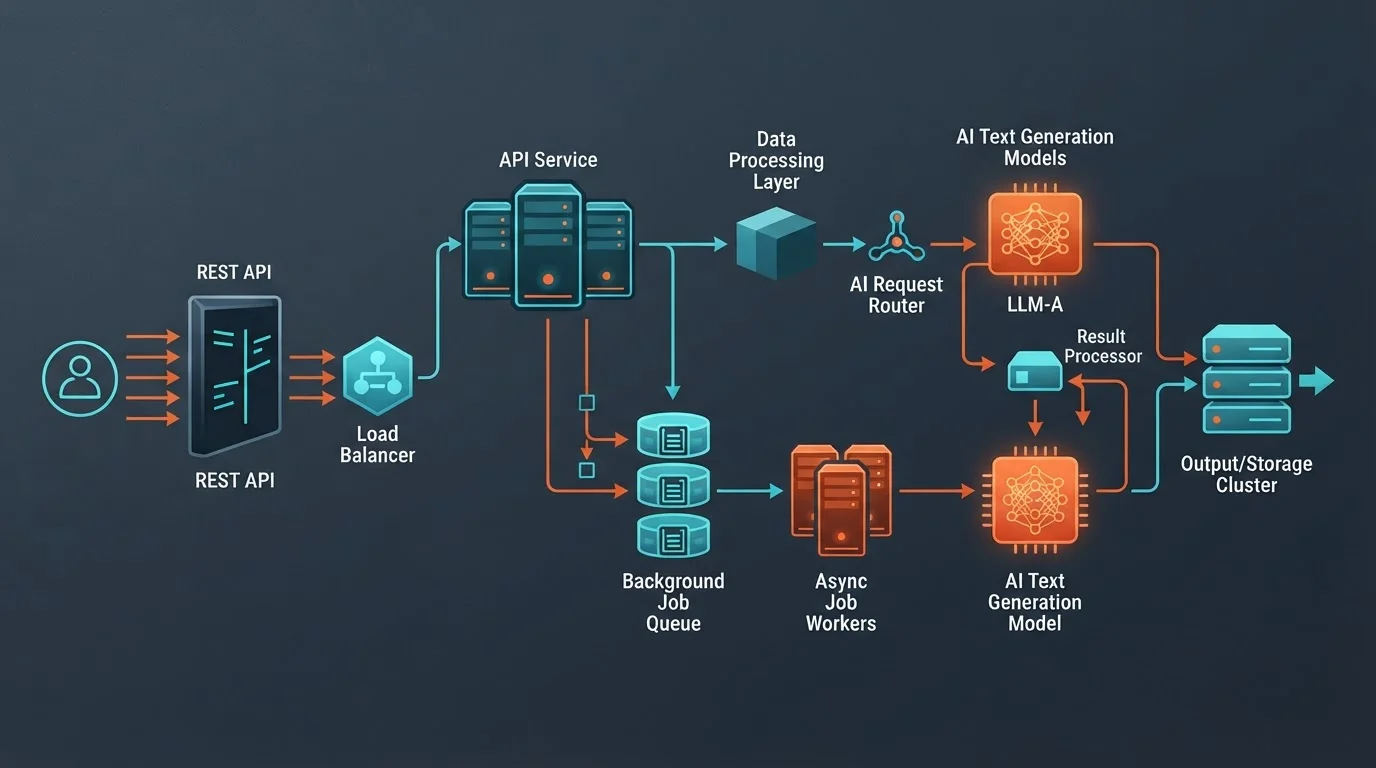
Large language models take anywhere from 15 to 45 seconds to stream a full-length post. Processing these requests synchronously leads to timeout errors at the gateway layer.
To maintain system stability, route jobs through an asynchronous queue like Redis or BullMQ. The queue manages rate limits across third-party AI APIs and handles retry logic if an upstream endpoint drops out.
[Event Trigger] -> [API Gateway] -> [Job Queue] -> [AI Engine + CDN Asset Pipeline] -> [Headless CMS]
Visual assets require similar care. Rather than storing base64 strings in your database, your pipeline should generate featured images, compress them into WebP format, and host them on a fast distribution network. If you want to streamline this asset pipeline, learn How to Optimize SEO Content Automatically via API Workflows and Image CDNs to keep page speed scores high without manual photo editing.
Validating Output Schema and Automating Meta Tag Population
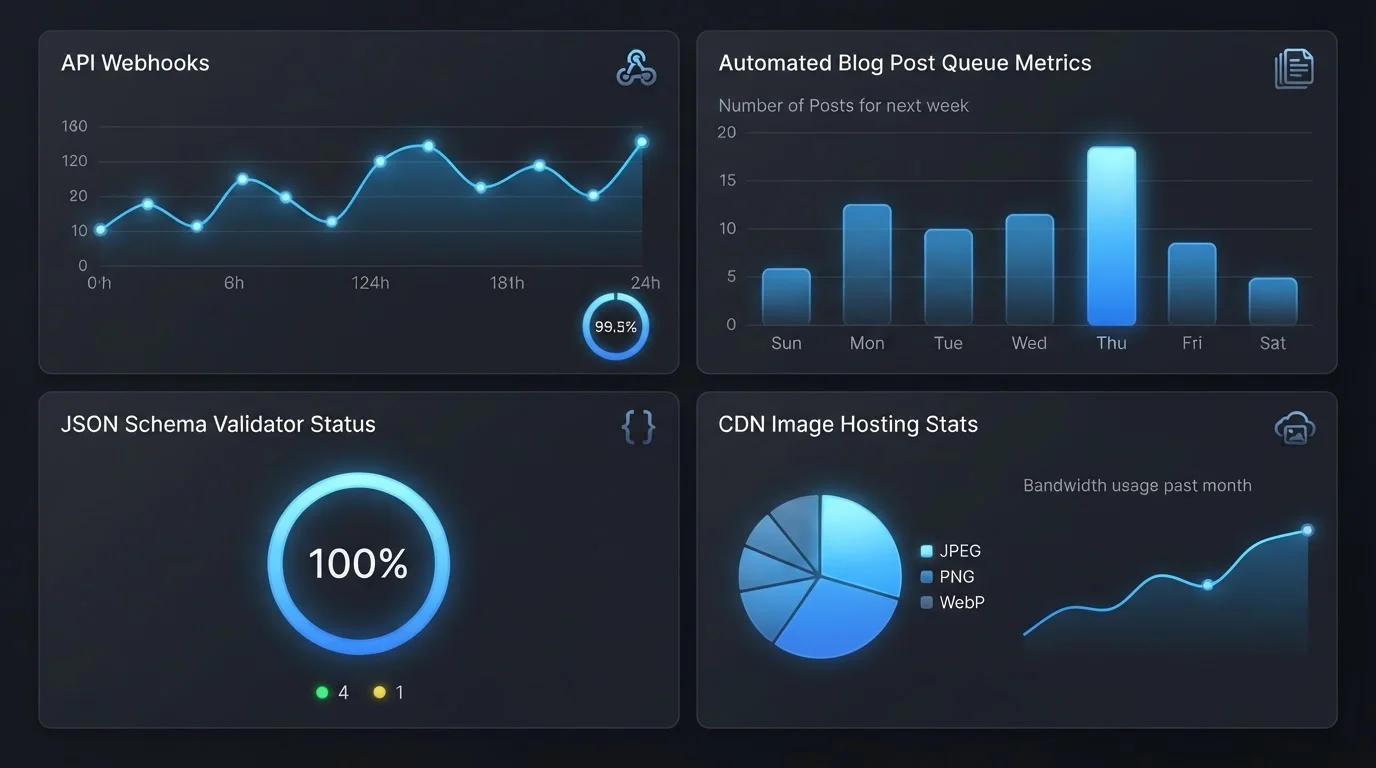
Before any post hits your live site, the raw JSON payload must pass schema validation. This step ensures all required fields—such as SEO titles, meta descriptions, canonical URLs, and Open Graph tags—are fully populated and formatted correctly.
{
  "title": "Complete Guide to API Gateway Authentication",
  "meta_description": "Learn how to implement OAuth2 and JWT validation in your API gateway architecture.",
  "slug": "api-gateway-authentication-guide",
  "body_markdown": "# Complete Guide...",
  "featured_image_url": "https://cdn.example.com/images/api-gateway.webp"
}
Once validated, your script pushes the payload directly into your headless cms integrations via REST or GraphQL. Setting up this type of automated blog posting guarantees that every published post strictly follows your site's SEO guidelines without requiring editorial review for every single line.
For teams looking for a pre-built solution that handles text generation, CDN hosting, and translation out of the box, our AI Auto Blogger – Generate blog posts from your API provides a turnkey pipeline.
Comparing Programmatic Content Workflows
When selecting an architecture for automated publishing, evaluate your options based on setup complexity and maintenance overhead:
| Strategy | Initial Setup Time | Asset Handling | Translation Support | Maintenance Effort |
|---|---|---|---|---|
| Manual + No-Code (Zapier/Make) | 2 hours | Manual uploads | Third-party plugins | High (frequent breakages) |
| Custom In-House Scripting | 40+ hours | Custom S3/Cloudflare setup | Manual API orchestration | High (ongoing engineering maintenance) |
| Managed API Engine (AIrun.blog) | 15 minutes | Automated CDN hosting | Native multi-language support | Minimal (fully managed) |
Custom scripts give you complete control over every line of code, but they demand ongoing maintenance when API schemas change. Managed engines reduce that friction so you can focus on building core product features.
Conclusion
Building a programmatic system to write SEO content allows SaaS teams to expand search coverage without expanding headcount. By combining event-driven webhooks, structured prompts, async background processing, and schema validation, you build a reliable content pipeline that operates continuously behind the scenes.
Visit AIrun.blog to set up your project and start generating scheduled, multilingual blog posts directly from your dashboard.